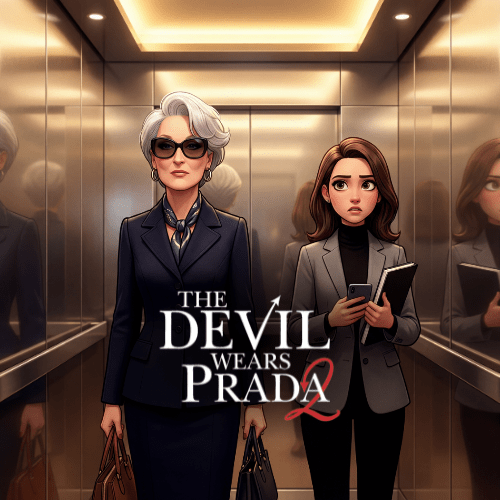
In 2006, ambition wore stilettos and silence. In 2026, it carries boundaries, Slack messages, and a refusal to apologize for either.
That’s the sharpest takeaway from The Devil Wears Prada 2. The sequel doesn’t just revisit Runway—it holds up a mirror to two decades of workplace evolution. And it’s not always flattering.
In 2006, the original film gave us one dominant archetype: the Ice Queen who made it to the top by becoming the most formidable person in any room. Miranda Priestly didn’t mentor. She weaponised. Her power was real, but it was also lonely, brittle, and built on fear.
We recognised her because we’d worked for her, or someone exactly like her. She was the first generation of women who cracked the corner office — and she did it by out-terrifying the men who built the building.
The original The Devil Wears Prada gave us a workplace defined by hierarchy, hustle, and a brutal apprenticeship model. You survived. You didn’t question. You didn’t expect kindness. The sequel flips that script, not entirely, but enough to make you uncomfortable in all the right ways.
Because today’s workplace isn’t just about performance. It’s about experience.
And that’s where the film lands its first punch.
Andy Sachs, now older, sharper, and far less willing to trade her sanity for proximity to power, represents the shift from blind ambition to intentional careers. She doesn’t just ask, “What do I need to succeed?” She asks, “What is success costing me?”
That question didn’t exist in the mainstream workplace narrative twenty years ago.
As such, the film has poignant and timely things to say about short attention spans, corporate manoeuvring, and the precarious state of journalism. But what it’s really saying is that underneath the Dolce & Gabbana cameos and the Lady Gaga soundtrack is this: the workplace has never needed allies more.
If the 2006 narrative showed us the first-generation women professionals whose corporate playbook was simple: get in, keep work twice as hard, and hope someone notices. The corner office wasn’t just a role. It was validation.
The sequel shows us those women. Still striving. Still carrying the weight of being “the first.” Still navigating systems that weren’t built with them in mind.
But now they’re doing it alongside a generation that plays by different rules.
Gen Z doesn’t romanticize burnout. They don’t equate suffering with success. They expect feedback, flexibility, and fairness: the best part they’re not shy about asking for it.
A big shift that the film beautifully captures is power has changed shape. It’s no longer about control. It’s about credibility.
Leaders who thrived on intimidation now find themselves outpaced by those who build trust. The film doesn’t vilify Miranda, it humanizes her. You see the tension of a leader who mastered one era trying to stay relevant in another.
The most compelling thread, though, is not about fashion or power. It’s about advocacy.
Because talent alone is still not enough.
Today, workplace culture talks about allyship, sponsorship, and psychological safety. The language is impeccable. The execution, often, is not. Sponsorship means using your seat at the table to pull someone else’s name into a conversation even when they’re not in the room for. It means recommending someone for an assignment before they think themselves ready. It means absorbing a little professional risk to back someone else’s potential.
For instance, Andy Sachs, who now in a position of influence, she faces a choice. Does she replicate the system she survived? Or does she become the ally she once needed?
That’s the question every leader should sit with.
Being an ally isn’t about grand gestures. It’s about everyday decisions. Who gets the assignment. Who gets introduced to the right room. Who gets defended when they’re not present.
And more importantly, who doesn’t.
The film makes it clear: power unused is power wasted. Because the workplace today isn’t built on compliance. It’s built on conversation.
What The Devil Wears Prada 2 captures, whether intentionally or not, is a workplace in transition. Four generations now share offices, Slack channels, editorial meetings, and wildly different assumptions about what leadership should look like. The Boomers who broke ceilings. Gen X who built careers in their shadow. Millennials who questioned the entire premise. Gen Z who refuses to perform gratitude for a system that was never designed with them in mind.
The sequel subtly dismantles the myth of the “self-made” professional. Every success story in the film has invisible hands behind it. Mentors. Advocates. Sometimes even quiet protectors.
You don’t just build your career anymore. You build others along the way.
Or you get left behind.
Because here’s the uncomfortable truth the film leans into nicely, but firmly: the workplace hasn’t become softer. It’s become smarter.
It still demands excellence. It still rewards results. But it now also demands awareness.
Of people. Of power. Of privilege.
The Devil Wears Prada 2 doesn’t give you a neat resolution. It tells us what works now. Clarity. Transparency. Inclusion. Real pathways to growth.
Workplace culture isn’t evolving in clean, linear ways. It’s messy. Layered. Human.
Just like the people in it. And this time, that’s exactly what makes it work. Because any industry will survive disruptions. It may not survive indifferences.