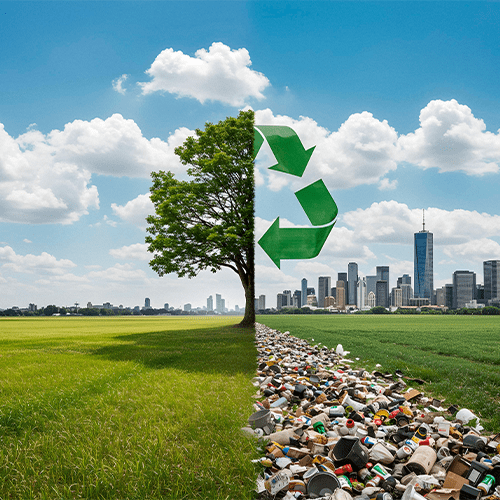
Earth Day 2026 brings in huge reminders close to home. 2025 was a witness to extreme weather – from heatwaves and water crisis to floods and glacier retreats, the reality of climate risk is inching closer more than before. Keeping this as the background and theme for this year’s Earth Day, “Our Power, Our Planet,” is more than a slogan; it’s a statement of responsibility for those who shape capital, supply chains, and products that hold real power over environmental outcomes.
As a country, India sits between vulnerability and influence. The impact of climatic changes is affecting agriculture, water security and millions of livelihoods. When leading Indian companies commit to net zero, adopt circular models, or invest in regenerative practices, they demonstrate that sustainability and profitability can reinforce each other rather than compete.
The gap between commitment and execution
While organizational commitments to climate are increasingly ambitious, the gap lies in the execution. Common fault lines inside organizations include:
- Measurement of blind spots: Emissions and resource used across Scope 1, 2 and primarily Scope 3 remain partially measured or estimated, leaving material impacts invisible.
- Shallow supply-chain engagement: Upstream and downstream emissions far exceed from direct operations, yet supplier requirements and follow up mechanisms often remain superficial.
- Limited credibility: Sustainability reports are often unaudited, based on fragmented data and undocumented assumptions, making it difficult for stakeholders to trust the numbers.
- Diffuse resource allocation: Investments are spread across many initiatives without a clear link to material environmental outcomes, favoring visible gestures over deep transformation.
These gaps are a representation of the distance between what the planet requires versus the current deliverables of the system. Closing this gap isn’t about publishing new commitments but also about using existing organizational power.
What exercising “our power” looks like in practice
Our Power, Our Planet becomes tangible when organizations embed environmental responsibility into the mechanics of how business is run. In practice, this can be seen when companies:
- Build transparent measurement systems: Tracking water, energy, emissions, and waste in real-time across locations enables targeted interventions and links operational choices directly to environmental performance.
- Activate supply-chain ecosystems: To reduce emissions and build resilience far beyond organizational boundaries, one must work with suppliers, logistics partners, and distributors on standards, training, and co-investment.
- Pursue circularity as a business model: To turn environmental constraints, one must turn towards designing out waste, extending product life, and recovering materials. This will result in cost savings, new revenue streams, and competitive advantage.
- Embrace independent accountability: Seeking external assurance over key environmental metrics builds rigor and signals that ESG is fundamental to value creation, not just communication.
These examples share a common pattern – they move from isolated projects to system changes that are traceable, repeatable, and integrated with commercial decisions.
Key questions for leadership on Earth Day 2026
In the spirit of “Our Power, Our Planet,” Earth Day can serve as a governance checkpoint rather than a one-day campaign. Leadership teams may find it useful to reflect on questions such as:
- Can the organization measure and verify environmental impact across all three scopes with sufficient confidence to inform decisions, not just disclosures?
- Are suppliers and partners contributors to environmental goals, or potential weak links in climate and nature strategies?
- Do current ESG and sustainability claims withstand independent scrutiny, or would data gaps and assumptions be difficult to explain?
- Are financial and human resources concentrated on initiatives with genuine planetary impact, or dispersed across activities chosen mainly for visibility?
- Is environmental responsibility embedded into core strategy, risk, and performance management, or still operating as a separate sustainability agenda?
Where the answers are uncertain or mixed, it is likely that the organization is yet not using its full power to protect and regenerate the shared environment on which its long-term success depends.
From theme to roadmap
“Our Power, Our Planet” is ultimately a call for alignment: aligning what organisations say with what they measure, decide, and do every day. The companies that will be strongest by the time the next Earth Day arrives are those that:
- Turn high-level environmental ambitions into clear priorities and decision rules.
- Strengthen data, controls, and assurance so that progress can be tracked and trusted.
- Work collaboratively across value chains to unlock reductions and resilience that no single actor can achieve alone.
- Regularly revisit their approach as risks, technologies, and stakeholder expectations evolve.
Organizations seeking to translate this year’s Earth Day theme into concrete changes in governance, data, supply-chain practice, and everyday decision-making and structured support can genuinely accelerate the journey from intention to impact. Contact bhanukumar@avtarcc.com to start or accelerate the journey from intention to impact.