
Recently, Nike celebrated 50 years of unquestioned influence in the market. It has, as New York Times puts it, ‘won the cultural marathon’. Stories deeply embedded in our memory banks, Nike has always been a step ahead in creating ‘ideas and not just items’. For instance, the performance hijab for female Muslim athletes designed to cover the head and neck with straps to keep it from slipping is a mark of true inclusion.
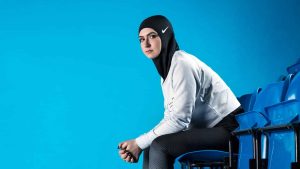
Image courtesy: Inc Magazine
Moreover, 56% of consumers are likely to shift brands if the brand does not meet their requirements. Inclusion now has a strong business case.
Accenture research has found that 4 in 10 (42%) consumers said that they would pay 5% more to shop with a brand committed to inclusion and diversity. And 29% would switch to a more enlightened retailer. Inclusion not only dictates markets but also defines the social psyche of the consumer population. Fostering an inclusive mindset involves thinking beyond what is inside the store. An apt example would be Starbucks’ “signing store” in Washington, D.C. It serves the hearing-impaired community by ensuring that the entire fleet of staff knows American Sign Language.
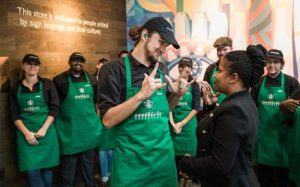
Image courtesy: QSR magazine
Retail being an industry that intimately interacts with consumers must bear in mind that people come with individually-specific characteristics. Ignoring one cohort will diminish the business potential. To illustrate the point, ‘The $1 Trillion Blind Spot’ revealed that 8% of Boomers consider themselves LGBTQ+, with each generation coming out in increased masses- 31% of the Gen Z population identify as LGBTQ+. Inclusive marketing could bring in nearly $1 trillion for brands but the LGBTQ+ community is often ignored, hence the blind spot.
Inclusion is more than just introducing sizes; it is about embracing people. And, being well-rounded about it. One can have disabilities and belong to the queer community. Not catering to either will misplace the consumer and generate negative revenue. While losing value because of lack of inclusion might seem far-fetched, Victoria’s Secret is a good example. After receiving backlash because of its ‘unhealthy’ beauty standards, Victoria’s Secret bid farewell to its annual fashion show. One can find a healthy contrast with pop star Rihanna’s SavagexFenty, which showcased models of all sizes, bodies, ethnicity, and orientation. With its curvy mannequins, the brand has earned public approval and earned $150 million as its annual revenue with its inclusion.
Brands now realize their reputation needs people to sustain them. It is spring time for inclusion!