




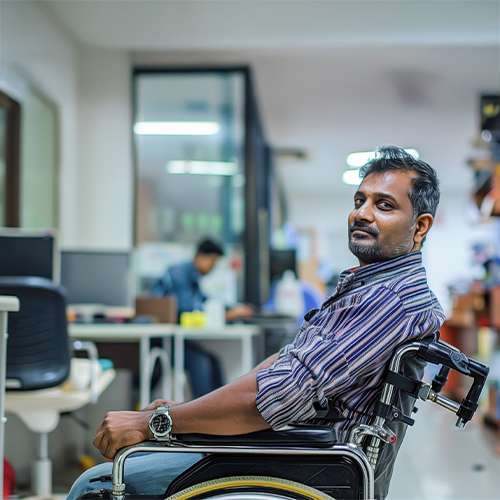
At a time when India is positioning itself as a global economic powerhouse, workplace inclusion can no longer remain a peripheral conversation. An inclusive labor ecosystem is not only a matter of social justice, but economic necessity.
Across industries and geographies, Persons with Disabilities (PwDs) continue to face persistent and most often, invisible barriers in the world of work. In India, these challenges are multiplied by structural realities. A significant proportion of PwDs are employed in informal, contractual, or gig-based roles, where job security, social protection, and access to health benefits are almost non-existent. Even within formal organizations, reasonable accommodation is often viewed as an exception rather than a responsibility, leading to higher attrition, stalled career progression, or complete exit from the workforce. The result is a substantial gap between the intent to include and the reality experienced by PwDs on the ground.
It is in this context that the New Labor code takes up critical importance. While disability inclusion has historically been addressed through standalone legislation, (Rights of Persons with Disabilities (RPwD) Act, 2016), there is growing recognition that systemic change requires embedding inclusion into mainstream labor policy.
Transparency and Clarity of employment terms
Employees are often left in dark with ambiguity on employment terms, duties, designation and social benefits. Through the new labor codes, the government has mandated the issuance of detailed appointment letters for all employees irrespective of type of employment, including gig workers, contract or project based jobs etc. This ensures transparency and standardizing terms across the sector with strict requirements for content and timely issuance. The New labor code empowers workers, especially in case of PwDs working in informal sector, to access benefits even without a permanent employer.
Extending Social Safety Nets
Ageing workforce dynamics intensify the need for robust health coverage and income security frameworks, especially for PwDs who are disproportionately impacted by gaps in social protection. Under the New Labor Codes 2025, all workers, including PwD employees are covered under the Code on Social Security, which guarantees PF, ESI and other welfare schemes regardless of the type of employment. This is especially important for PwDs in non-traditional employment to access benefits like insurance and pension and hence expands the safety net for PwDs across sectors.
Improved Access to Health Screening and Preventive Healthcare
In a major and welcome shift in Indian labor regulation, the new labor code mandates employers to provide free annual health check up to their employees. This connects employment with proactive health care as a basic duty of employers under the OSHWC Code. This is an extremely significant mandate as prior to the new labor codes, there was no nation-wide legal mandate requiring employers to offer routine health screening. Especially in case of PwDs, regular check-ups will help in identifying, early intervention or management of co-existing conditions. A better documentation of health status for workplace accommodations, preventive care and improved long term well-being.
The way forward
India has one of the strongest disability employment laws on paper among emerging economies, but lags significantly behind developed countries in enforcement, employer accountability, and real employment outcomes for Persons with Disabilities. The biggest gap is that despite strong laws, India has far fewer PwDs actually employed in comparison to developed economies.
As India navigates this new phase of labor reform, the conversations must shift from compliance to impact, from intent to implementation. There is an urgent need to understand that creating workplaces where Persons with Disabilities can participate fully, with dignity and security, is no longer optional. It is, the need of the hour
A trusted champion in workplace culture and inclusion, Avtar supports organisations through PwD audits, industry-specific initiatives, and sensitisation workshops. Designed by experts, our programs enable leaders and teams to embed inclusion into everyday practices while driving organisational excellence.